Why Digital Car Records Are Better Than Paper Records
Managing a car involves more than driving it. Every car owner needs to keep track of service history, insurance details, Registration Certificate (RC), Pollution Under Control (PUC) certificates, maintenance expenses and other important documents.
Many car owners still depend on paper bills, printed documents and physical files to manage this information. However, paper records can get lost, damaged or become difficult to find when needed.
Digital car records offer a simpler way to organise and manage important vehicle information. By storing car documents and maintenance details digitally, owners can access their records more easily and keep track of their vehicle’s history.
In this blog, we will explore why digital car records are better than paper records and how they can make car ownership easier.
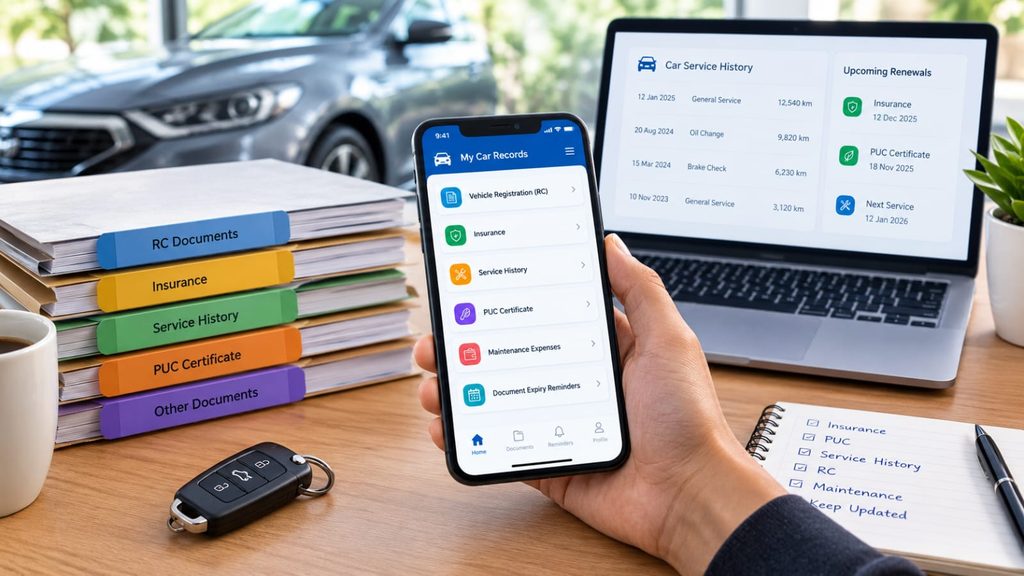
What Are Digital Car Records?
Digital car records are electronic copies of important vehicle documents and information stored on a mobile phone, computer or secure online platform.
These records can include:
- Car service history and maintenance bills
- Vehicle Registration Certificate (RC)
- Car insurance policy details
- Pollution Under Control (PUC) certificate
- Repair and replacement records
- Fuel and maintenance expenses
- Warranty information
- Insurance and document expiry dates
Instead of searching through physical files, car owners can organise their information digitally and access it whenever required.
- Easy Access to Important Car Information
One of the biggest advantages of digital car records is easy access. When documents are stored in different files or drawers, finding a particular bill or certificate can take time.
Digital records help keep important vehicle information organised in one place. Owners can check their service history, insurance information and maintenance details without searching through piles of paper.
For example, if you need to check when your car was last serviced, you can refer to your digital service records instead of looking for an old workshop bill.
- Reduced Risk of Losing Important Documents
Paper documents can be misplaced, torn, damaged by water or lost during relocation. Losing important records may make it harder to retrieve service details or prove previous maintenance work.
Digital car records reduce dependence on physical documents. When files are backed up securely, owners can retrieve copies even if the original paper documents are unavailable.
However, digital copies should not be treated as a replacement for every original document. Keep original documents when legally required and store digital copies securely.
- Better Car Service History Management
Maintaining a complete car service history is important for understanding a vehicle’s condition.
Paper bills may come from different service centres, making it difficult to track previous repairs and maintenance. Digital records make it easier to organise service dates, odometer readings, parts replaced and repair costs.
A well-maintained digital service history can help owners:
- Track regular servicing and maintenance.
- Identify recurring repair issues.
- Monitor replacement dates for important parts.
- Understand long-term maintenance expenses.
- Share relevant maintenance information with a potential buyer.
Keeping these details updated can support better maintenance decisions and improve transparency when selling a used car.
- Never Miss Important Document Expiry Dates
Car owners need to monitor important dates related to insurance, PUC certificates and other applicable vehicle documents.
When expiry dates are written on paper or remembered mentally, it is easy to overlook an upcoming renewal.
Digital car records make it easier to organise expiry dates and set reminders using a calendar or reminder application.
For example, you can add reminders for:
- Car insurance renewal
- PUC certificate renewal
- Scheduled vehicle servicing
- Warranty expiry
- Other applicable vehicle document renewals
These reminders help you plan ahead and reduce the risk of missing important deadlines. Always verify the applicable validity period and renewal requirements for your vehicle.
- Save Time During Emergencies and Repairs
Unexpected vehicle problems can happen at any time. During a repair or breakdown, knowing your vehicle’s service history and previous repair details can be useful.
Digital records allow you to retrieve relevant information more quickly, provided you have access to your device or backup.
For instance, if a mechanic asks when a component was last replaced, you can check the maintenance record rather than trying to remember the date.
This can help you communicate more clearly with the service centre and make informed maintenance decisions.
- Better Tracking of Car Maintenance Expenses
Car ownership includes several expenses, such as fuel, servicing, repairs, insurance and replacement parts.
Paper bills can make it difficult to calculate how much you spend on your vehicle over time.
Digital car records help you organise expenses by date, category and service. With a spreadsheet or suitable vehicle-management application, you can review your maintenance spending and identify recurring costs.
Tracking expenses can also help you plan your annual car maintenance budget more effectively.
- More Convenient When Selling Your Car
A well-documented service history can help potential buyers understand how a car has been maintained.
When selling a used vehicle, owners may need to provide information about previous servicing, repairs and maintenance. Searching for old paper bills can be inconvenient, especially when records have accumulated over several years.
Organised digital car records make it easier to retrieve relevant information and share supporting documents when appropriate.
Although digital records do not guarantee a higher resale price, complete and consistent documentation can help build buyer confidence and support a more transparent sale.
- Easier Organisation and Less Paper Clutter
Keeping every vehicle bill and document in physical form requires storage space. Over time, these papers can become difficult to organise.
Digital storage reduces paper clutter and makes it easier to arrange documents using folders, filenames or categories.
For example, you can create separate folders for:
- Vehicle documents
- Insurance and PUC
- Service and repair bills
- Warranty documents
- Maintenance expenses
Choose a secure storage method, use clear filenames and maintain backups so your information remains accessible when needed.
Digital Car Records vs Paper Records
| Feature | Digital Car Records | Paper Records |
| Accessibility | Convenient with device access | Requires physical access |
| Storage | Requires digital storage space | Requires physical space |
| Risk of damage | Can be protected with backups | Can be damaged or destroyed |
| Searching | Often faster with search tools | May require manual searching |
| Expiry reminders | Can be set digitally | Usually requires manual tracking |
| Expense tracking | Easier with digital tools | Often requires manual calculations |
| Sharing information | Convenient through secure digital sharing | May require photocopies or physical documents |
Both methods have their uses. Keeping digital copies alongside legally required original documents can provide a practical balance.
How to Start Maintaining Digital Car Records
You do not need an advanced system to begin organising your vehicle information. Follow these simple steps:
Step 1: Collect your existing documents
Gather your car insurance details, RC information, PUC certificate, service bills, repair invoices and warranty documents.
Step 2: Scan or photograph paper records
Create clear digital copies of your paper documents. Check that the text, dates and important details are readable.
Step 3: Organise your files
Create separate folders for vehicle documents, service history, insurance and maintenance expenses.
Step 4: Record service details
After each service, update the date, odometer reading, work completed, parts replaced and amount paid.
Step 5: Set reminders
Add calendar reminders for upcoming service appointments, insurance renewals and other relevant expiry dates.
Step 6: Back up your information
Use a trusted storage service and maintain a secure backup. Protect sensitive vehicle and personal information with appropriate access controls.
Step 7: Update your records regularly
Whenever you renew a document, visit a service centre or repair your vehicle, update the corresponding digital record.
Common Mistakes to Avoid When Managing Digital Car Records
Digital storage is useful, but it works best when records are maintained properly.
Avoid these common mistakes:
- Saving documents without clear filenames.
- Forgetting to update service and repair information.
- Storing files in only one location without a backup.
- Ignoring document expiry dates.
- Sharing sensitive vehicle information through unsecured links.
- Assuming a digital copy replaces an original document wherever the original is legally required.
A simple, consistent system can make your records more reliable and useful over time.
Conclusion
Digital car records offer a convenient way to manage vehicle documents, service history, maintenance expenses and important expiry dates. Compared with relying only on paper records, digital storage can make information easier to find, organise and share.
For Indian car owners, maintaining organised records can simplify routine maintenance, support better expense tracking and make it easier to prepare documentation when selling a vehicle.
Start by digitising your existing documents and updating your records whenever your car is serviced or a document is renewed. A small habit today can make managing your car much easier in the future.
Frequently Asked Questions (FAQs)
- What are digital car records?
Digital car records are electronic records of vehicle documents, service history, repairs, insurance details, maintenance expenses and other important car information.
- Are digital car records better than paper records?
Digital car records are often easier to search, organise, back up and share. However, paper originals may still be required in certain situations, so it is useful to maintain both where appropriate.
- Which car documents should I store digitally?
You can store copies of your RC, insurance policy, PUC certificate, service bills, repair invoices, warranty details and other relevant vehicle documents.
- How can I track my car service history digitally?
Record each service date, odometer reading, work performed, parts replaced and total cost. Store the corresponding invoices in an organised digital folder or vehicle-management application.
- Can digital car records help when selling a used car?
Yes. Organised service and repair records can help demonstrate maintenance history, answer buyer questions and improve transparency during the sale.
- How do I keep digital car records safe?
Use trusted storage, strong passwords, appropriate access permissions and regular backups. Avoid sharing sensitive documents publicly and retain original documents whenever required.