How to Track Car Insurance, PUC and RC Expiry Dates
Owning a car comes with several responsibilities, and keeping track of important vehicle documents is one of them. Car insurance, Pollution Under Control (PUC) certificates, and Registration Certificates (RC) are essential documents that every car owner should manage properly.
Forgetting a renewal date can lead to fines, legal problems, or unnecessary stress. That is why understanding car document expiry and setting timely reminders can help you keep your vehicle documents up to date.
In this guide, you will learn how to check car insurance, PUC, and RC validity, track their expiry dates, and renew documents on time.
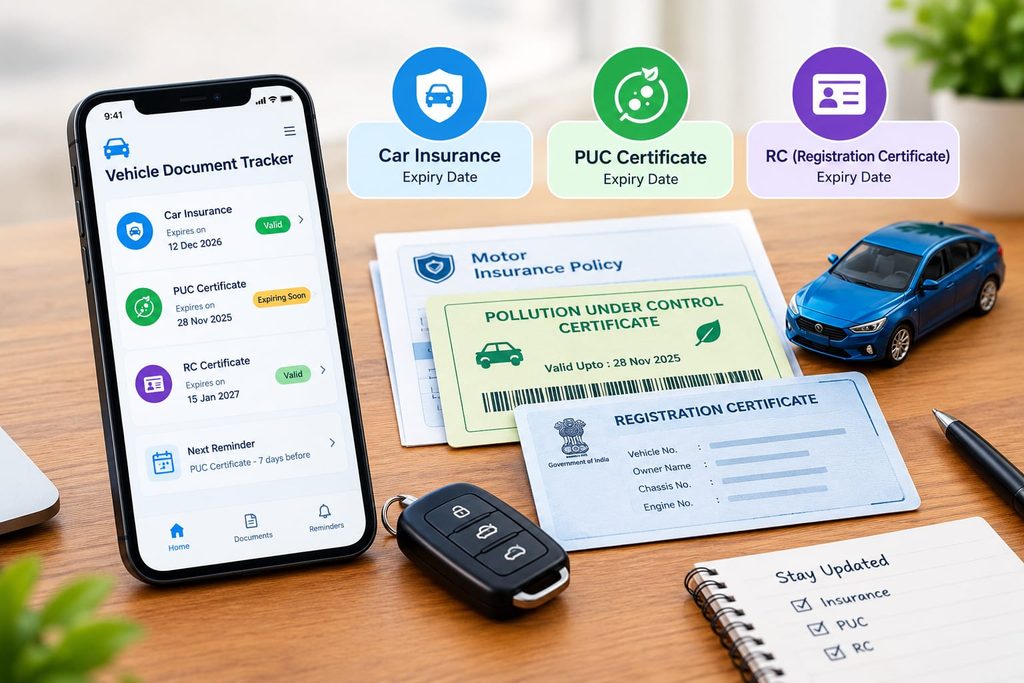
Why Is It Important to Track Car Document Expiry Dates?
Every car owner should know when their important vehicle documents expire. Driving with expired or invalid documents can create legal and financial problems.
Here are some reasons why tracking expiry dates matters:
- Avoid penalties: Keep your required vehicle documents valid and reduce the risk of fines.
- Stay legally compliant: Follow applicable vehicle and traffic regulations.
- Maintain insurance protection: Renew your car insurance before it expires to avoid a gap in coverage.
- Meet pollution requirements: Keep your PUC certificate valid wherever required.
- Avoid last-minute stress: Plan renewals in advance instead of waiting until the expiry date.
Regularly checking your car document expiry dates helps make car ownership easier and more organised.
- How to Track Car Insurance Expiry Dates
Car insurance protects you against covered financial losses arising from accidents and other insured events. Third-party motor insurance is generally mandatory for vehicles used on public roads in India.
Driving without valid mandatory insurance can result in penalties. Therefore, it is important to check your policy’s expiry date and renew it on time.
How to Check Your Car Insurance Expiry Date
Follow these steps:
- Open your car insurance policy document.
- Find the policy period or the section showing the policy’s start and end dates.
- Note the expiry date in your phone calendar.
- Check renewal reminders sent by your insurance company through SMS or email.
- Visit your insurer’s official website or app if you need to verify your policy details.
- Renew the policy before it expires.
Tips for Managing Car Insurance
- Save a digital copy of your insurance policy.
- Set reminders 30 days and 7 days before expiry.
- Compare suitable policy options before renewal.
- Check the coverage, insured declared value, and add-ons before making a decision.
Important: Do not assume that your insurance has been renewed just because you received a reminder. Check the updated policy and its validity dates.
- How to Track PUC Certificate Expiry Dates
A Pollution Under Control (PUC) certificate confirms that your vehicle’s emissions have been tested against the applicable pollution standards.
Car owners should check the certificate’s validity and arrange a new emissions test when required.
How to Check Your PUC Expiry Date
You can track your PUC validity by following these steps:
- Find your current PUC certificate.
- Check the validity or valid-until date printed on it.
- Record the date in your calendar or vehicle document tracker.
- Set a reminder before the certificate expires.
- Visit an authorised PUC testing centre to get your vehicle tested when renewal is due.
You may also be able to check certificate details through the official Parivahan portal, depending on the availability of the relevant service and vehicle records.
Tips for Managing PUC Validity
- Keep a digital copy of your latest certificate.
- Check the validity date whenever you review your car documents.
- Set a reminder at least 7–15 days before expiry.
- Follow the validity period applicable to your vehicle and certificate.
Important: PUC validity can vary according to vehicle category, age, applicable rules, and certificate conditions. Always follow the date printed on your current certificate.
- How to Track Your Car RC Validity
The Registration Certificate (RC) is an important document that records your vehicle’s registration details. It contains information such as the registration number, vehicle details, and registered owner’s information.
Unlike insurance and PUC certificates, an RC does not necessarily require annual renewal. However, registration validity and renewal requirements depend on the vehicle category and applicable rules.
How to Check Your RC Validity
Follow these steps:
- Locate your physical RC or digital RC.
- Check the registration details and any validity date shown.
- Visit the official Parivahan website if you need to check available registration services.
- Enter the required vehicle details through the appropriate official service.
- Check whether any registration renewal or related action is required.
- Add a reminder well before the applicable validity deadline.
For private vehicles, registration is generally valid for 15 years from the date of initial registration and may be renewed for subsequent periods, subject to applicable requirements. Commercial vehicles and other vehicle categories can have different requirements.
Tips for Managing RC Details
- Keep your RC information accurate.
- Store a digital copy in DigiLocker or another authorised government-supported service, where available.
- Check the registration validity well before the relevant deadline.
- Update the required records when ownership or other registration details change.
Important: Always verify your vehicle’s actual registration status and renewal requirements through the relevant transport authority.
- Best Ways to Track Car Document Expiry Dates
You do not need a complicated system to manage your car documents. A few simple habits can help you remember important deadlines.
Use Your Mobile Calendar
Add the expiry dates for car insurance and PUC, along with any applicable RC renewal deadline, to Google Calendar or your phone’s calendar.
Create more than one reminder so that you have enough time to complete the required process.
Use DigiLocker or Official Digital Services
DigiLocker and relevant government vehicle services can help you access eligible digital documents and records. Availability may vary depending on the document and service.
Keep your documents organised and check the information against the latest records.
Maintain a Vehicle Document Checklist
Create a simple checklist containing:
- Car insurance policy expiry date
- PUC certificate validity date
- RC registration validity or renewal date
- Driving licence expiry date, where applicable
- Other relevant vehicle document dates
Review this checklist once every month.
Keep Digital and Physical Copies
Store copies of important documents securely on your phone or in an appropriate cloud storage service. Keep physical documents safely where needed.
Digital copies can make it easier to find the relevant information when you need it.
- Sample Car Document Expiry Tracker
A basic table can help you organise all your vehicle document deadlines in one place.
Document| What to Check| When to Set a Reminder
Car Insurance| Policy expiry date| 30 days before
PUC Certificate| Valid-until date| 7–15 days before
RC| Registration validity and renewal requirements| Well before the applicable deadline
Driving Licence| Licence expiry date| 30 days before
The reminder periods above are practical suggestions, not official deadlines. Adjust them according to your needs and the applicable renewal requirements.
- Common Mistakes to Avoid
Many car owners forget important document details because they do not have a regular tracking system.
Avoid these common mistakes:
- Waiting until the last day to renew insurance.
- Assuming a PUC certificate is valid for the same period for every vehicle.
- Believing that every RC needs to be renewed annually.
- Ignoring messages from insurers or transport authorities.
- Saving documents without recording their validity dates.
- Forgetting to update a tracker after renewal.
- Relying only on an old digital or printed copy without checking the latest status.
Checking your documents regularly can help you avoid these problems.
- How a Car Document Tracker Can Make Life Easier
A car document tracker is a simple way to organise your vehicle-related information. It helps you record expiry dates, set reminders, and identify documents that need attention.
For example, you can maintain a spreadsheet with the document name, issue date, expiry date, renewal status, and reminder date. Updating it after every renewal keeps the information useful.
If you manage more than one vehicle, maintaining a separate record for each car can make tracking even easier.
Frequently Asked Questions (FAQs)
- What is car document expiry?
Car document expiry refers to the date when a vehicle-related document, such as an insurance policy or PUC certificate, stops being valid. Registration and licence validity depend on their respective rules and conditions.
- How can I check my car insurance expiry date?
Check the policy period printed on your insurance document. You can also use your insurer’s official website, app, or customer support to verify the current policy details.
- How can I check my PUC certificate expiry date?
Check the valid-until date on your latest PUC certificate. You may also be able to access the certificate through the official Parivahan service.
- Does a car RC expire every year?
No. A private vehicle’s registration is generally valid for 15 years from initial registration, subject to applicable rules. Renewal requirements differ by vehicle category and circumstances.
- How early should I set car document expiry reminders?
As a practical approach, set insurance reminders 30 days before expiry and another 7 days before expiry. For PUC and RC, choose reminders based on their actual validity dates and applicable requirements.
- Can I store my car documents digitally?
Eligible vehicle documents may be available through DigiLocker and other authorised digital services. Keep your records accessible and verify their validity when needed.
- What happens if I forget to renew my car documents?
The consequences depend on the document. Expired insurance can leave you without the intended insurance coverage and can violate mandatory insurance requirements. An expired PUC certificate or registration may also lead to compliance issues or penalties, depending on the applicable rules.
Conclusion
Tracking car insurance, PUC, and RC validity does not have to be difficult. By checking your documents regularly, recording their validity dates, and setting timely reminders, you can manage car document expiry more effectively.
Start with a simple vehicle document checklist, keep your records organised, and verify renewal requirements through official sources. A few minutes of planning can help you avoid last-minute stress and make car ownership more convenient.
Make car ownership simpler with Moovcar.ai. Explore useful automotive guides, vehicle document tips, and car maintenance information to stay organised throughout your car ownership journey.