Car Service Interval: When Should You Service Your Car?
Regular car maintenance is important for keeping your vehicle safe, reliable, and fuel-efficient. One of the most important things every car owner should understand is the car service interval.
Many car owners are unsure when to change engine oil, replace filters, check the brakes, or take their vehicle for routine maintenance. Delaying these services can lead to unexpected breakdowns and expensive repairs.
In this guide, we will explain what a car service interval means, how often you should service your car, which parts need regular attention, and how to maintain a proper service schedule.
What Is a Car Service Interval?
A car service interval is the recommended time or distance between two vehicle services. It is usually measured in kilometres, months, or both.
For example, a manufacturer might recommend servicing a car every 10,000 kilometres or 12 months, whichever comes first. The actual interval depends on the vehicle’s make, model, engine type, and manufacturer recommendations.
Following the recommended car service interval helps keep your vehicle in good condition and allows mechanics to identify potential problems before they become serious.
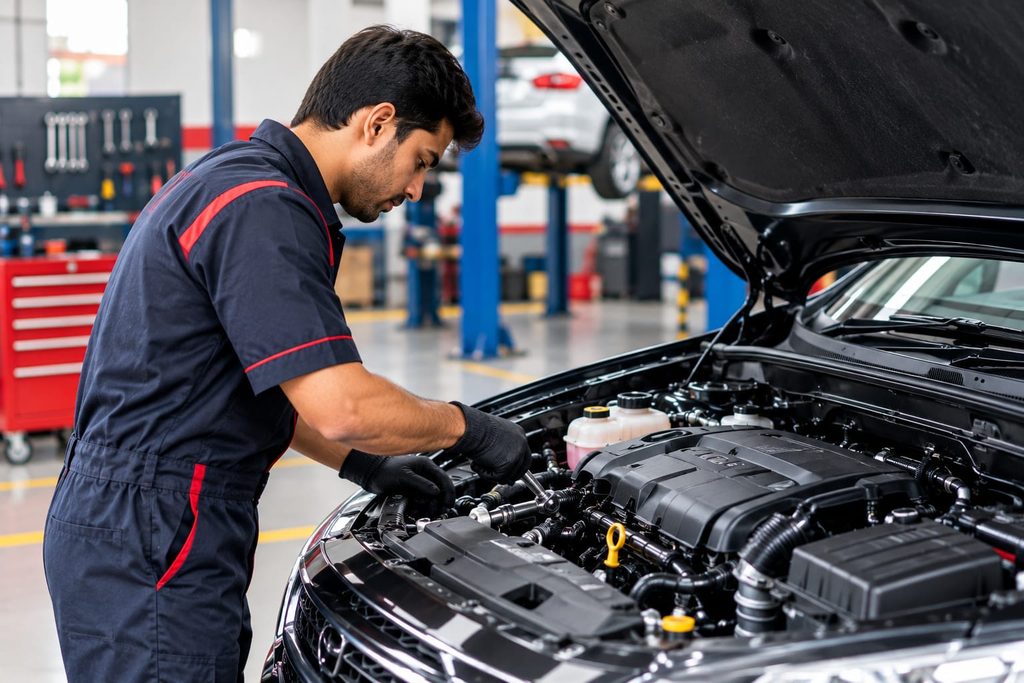
How Often Should You Service Your Car?
The correct service schedule depends on your car manufacturer’s recommendations. Many passenger cars have periodic maintenance schedules based on distance travelled and time elapsed.
The following table is a general guide, not a universal schedule.
| Service or check | General guideline |
| Engine oil and oil filter | As recommended in the owner’s manual |
| Routine vehicle service | Often every 6–12 months, depending on the vehicle |
| Brake inspection | During scheduled servicing and whenever a problem appears |
| Tyre pressure and condition | Check regularly, ideally monthly |
| Battery inspection | Periodically and when starting problems occur |
| Air and cabin filters | Inspect and replace according to the manual and condition |
| Coolant and other fluids | Check and replace according to manufacturer guidance |
Important: Always follow your vehicle’s owner’s manual. Some cars require servicing at shorter or longer intervals, and severe driving conditions may require more frequent maintenance.
Why Is Following the Car Service Interval Important?
- Helps Maintain Engine Performance
Engine oil lubricates moving parts and helps reduce friction and wear. Replacing it at the recommended interval helps protect the engine and maintain smooth performance.
- Improves Vehicle Safety
Regular servicing includes checks of important safety components such as brakes, tyres, lights, and steering-related systems. These inspections can help identify issues before they become dangerous.
- Helps Prevent Expensive Repairs
Small issues can become major problems when ignored. Regular maintenance gives technicians an opportunity to identify leaks, unusual wear, and developing mechanical faults early.
- Supports Fuel Efficiency
Correct tyre pressure, appropriate engine maintenance, and properly functioning vehicle systems can help your car operate efficiently. Actual fuel economy also depends on traffic, driving habits, and vehicle condition.
- Helps Maintain Resale Value
A well-maintained car with complete service records can give prospective buyers more confidence in its maintenance history.
What Happens During a Regular Car Service?
A routine car service may include the following checks, depending on your vehicle’s maintenance schedule.
- Engine oil: Check the level and replace the oil when required.
- Oil filter: Inspect or replace it as recommended.
- Air filter: Check for dirt and blockage.
- Brakes: Inspect brake pads, discs, and other relevant components.
- Tyres: Check pressure, tread depth, and uneven wear.
- Battery: Check its condition and charging system when appropriate.
- Coolant: Check the level and condition.
- Other fluids: Inspect brake fluid, transmission fluid, and other applicable fluids.
- Lights and wipers: Check visibility and lighting systems.
- Air conditioning: Check performance if required or if you notice a problem.
Not every item needs replacement at every service. The mechanic should follow the manufacturer’s schedule and the actual condition of each component.
What Factors Affect Your Car Service Interval?
Driving Conditions
Frequent driving in heavy traffic, dusty environments, or on rough roads may increase maintenance requirements. Repeated short trips can also affect some vehicles differently from longer journeys.
Vehicle Age and Mileage
Older vehicles and cars with high mileage may need additional inspections because certain components can wear out over time.
Engine and Fuel Type
Petrol, diesel, hybrid, and electric vehicles have different maintenance requirements. For example, electric vehicles do not need engine oil changes, but their tyres, brakes, cooling systems, and other components still require appropriate maintenance.
Manufacturer Recommendations
Different manufacturers specify different maintenance schedules. Always check the manual for your exact vehicle rather than relying only on a general kilometre-based rule.
Signs That Your Car May Need Servicing
Do not wait for your next scheduled service if you notice warning signs such as:
- An engine warning light or another dashboard warning.
- Unusual engine noises or excessive vibration.
- Reduced braking performance or unusual brake sounds.
- Fluid leaking beneath the vehicle.
- Difficulty starting the engine.
- Overheating or an unusual smell.
- A noticeable change in vehicle performance.
Some warning signs require immediate attention. Stop driving when it is unsafe to continue and arrange professional assistance.
How to Maintain a Proper Car Service Schedule
Follow these simple steps to keep your vehicle’s maintenance organised.
- Check your owner’s manual: Find the recommended service interval for your vehicle.
- Record the current odometer reading: Note the kilometres when each service is completed.
- Save service invoices: Keep records of repairs, oil changes, inspections, and replaced parts.
- Track the next service date: Consider both the time interval and kilometre limit.
- Set reminders: Use a calendar or vehicle maintenance app to avoid missing scheduled services.
- Choose a reliable service centre: Ask for a clear explanation of recommended work and replacement parts.
- Review your service history: Check previous maintenance records before planning the next service.
Frequently Asked Questions
- What is the normal car service interval?
There is no single interval for every car. Some vehicles require maintenance at specific kilometre or time limits. Check your owner’s manual for the correct schedule.
- Can I delay my car service?
Delaying a service may increase the risk of wear, faults, or missed maintenance. Follow the manufacturer’s schedule and contact a service centre if you cannot attend on time.
- Should I service my car based on kilometres or months?
Follow whichever limit the manufacturer specifies first. A car that is driven very little may still need time-based maintenance.
- Does a new car need regular servicing?
Yes. New cars still require scheduled inspections and maintenance. Following the recommended schedule also helps you comply with applicable warranty conditions.
- How can I remember my next car service date?
Keep a record of the last service date, odometer reading, work completed, and next recommended service. Set a reminder based on the manufacturer’s time or distance limit.
Conclusion
Understanding your car service interval helps you plan maintenance, protect important vehicle components, and reduce the risk of unexpected repairs. Regular inspections and timely servicing can also support safety, reliability, and long-term vehicle ownership.
Always use your manufacturer’s recommended schedule instead of following a fixed interval for every car. Keep your service invoices and maintenance records organised so you know what has been completed and what needs attention next.
A little planning today can help you take better care of your car tomorrow.