Car Maintenance Schedule: A Complete Guide for Car Owners in India
Maintaining your car regularly is important for its performance, safety, and long-term reliability. A proper car maintenance schedule helps you understand when to check engine oil, inspect tyres, replace filters, and service important vehicle components.
Many car owners wait until a warning light appears or a problem develops before visiting a mechanic. However, regular maintenance can help identify small issues early and reduce the risk of unexpected breakdowns.
In this guide, you will learn about a car maintenance schedule, important service intervals, monthly vehicle checks, and practical car maintenance tips for Indian driving conditions.
What Is a Car Maintenance Schedule?
A car maintenance schedule is a planned list of inspections, services, and replacements that your vehicle needs at specific time intervals or kilometre readings.
The schedule usually includes engine oil changes, air filter inspections, tyre rotation, brake checks, battery inspections, and other essential maintenance tasks.
Every car has different maintenance requirements depending on its manufacturer, model, engine type, age, and driving conditions. Always follow the owner’s manual for the correct service intervals.
Why Is a Car Maintenance Schedule Important?
Following a regular car maintenance schedule offers several benefits.
- Improves Vehicle Safety
Regular inspections help identify worn brake pads, damaged tyres, faulty lights, and other problems that may affect your safety.
- Helps Prevent Unexpected Breakdowns
Checking essential components regularly can help identify potential issues before they cause a breakdown.
- Supports Better Engine Performance
Changing engine oil and maintaining the correct filters help keep the engine operating as intended.
- Helps Control Maintenance Costs
Identifying minor problems early may prevent them from developing into more expensive repairs.
- Helps Maintain Resale Value
A well-maintained car with organised service records can be easier to evaluate when you decide to sell it.
Car Maintenance Schedule by Time and Kilometres
The following table is a general maintenance guide for car owners. Actual service intervals vary by vehicle, so check your owner’s manual before scheduling any replacement.
| Maintenance Task | General Check or Service Interval |
| Engine oil and oil filter | As specified by the manufacturer |
| Tyre pressure | At least monthly and before long trips |
| Tyre condition | Monthly |
| Brake system | During scheduled services or when symptoms appear |
| Engine air filter | Inspect according to the service schedule |
| Battery | Check periodically and during servicing |
| Coolant level and condition | Check according to the owner’s manual |
| Wiper blades and lights | Monthly |
| Wheel alignment and balancing | When needed or as recommended |
| AC filter | Inspect and replace as recommended |
| Timing belt | Replace at the manufacturer-specified interval, if fitted |
| General vehicle inspection | At scheduled service intervals |
Important: These are general guidelines, not a universal replacement schedule. Some cars require maintenance by time, kilometres driven, or whichever comes first.
Monthly Car Maintenance Checklist
You do not need to visit a service centre for every basic inspection. These simple checks can help you monitor your car’s condition.
Check Tyre Pressure
Maintain tyre pressure according to the vehicle manufacturer’s recommendation. You can usually find the recommended pressure on a label inside the driver’s door or in the owner’s manual.
Check tyres when they are cold for a more accurate reading.
Inspect Tyre Condition
Look for cuts, cracks, uneven wear, or bulges. Check the tread depth and inspect the spare tyre if your vehicle has one.
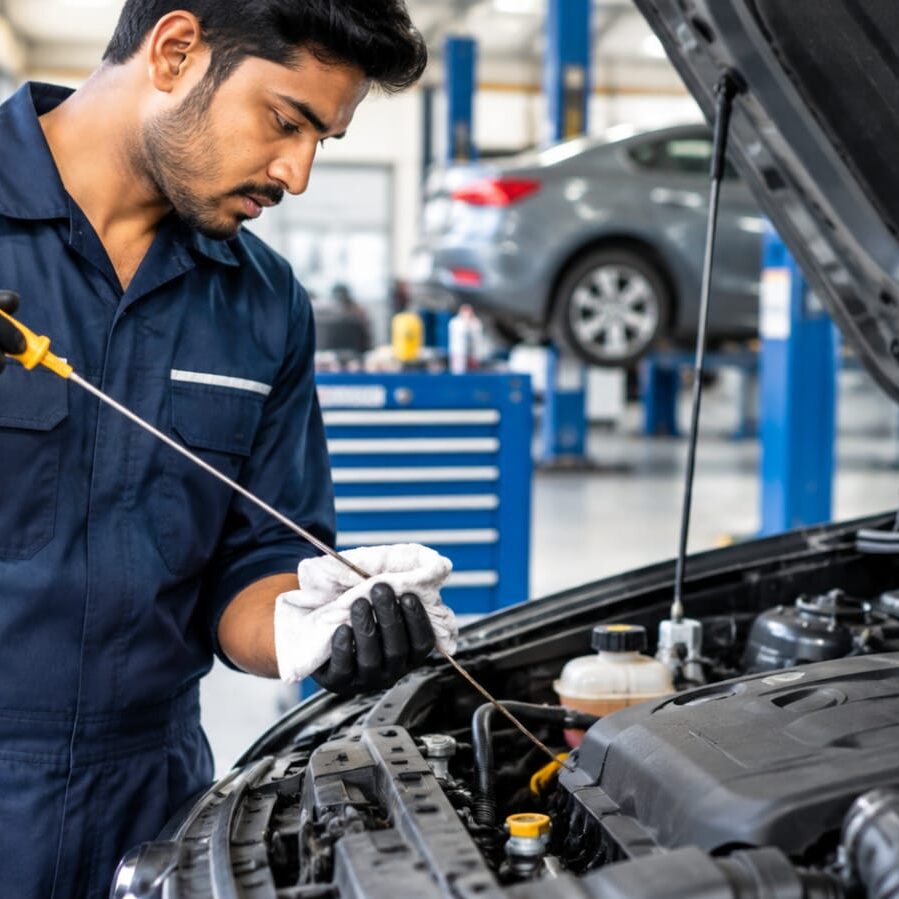
Check Engine Oil
Follow the owner’s manual to check the engine oil level safely. If the level is low or you notice unusual oil leaks, investigate the cause.
Inspect Coolant and Other Fluids
Check coolant, brake fluid, and other accessible fluid levels according to the manufacturer’s instructions. Never open a hot cooling system.
Test Lights and Wipers
Check headlights, brake lights, indicators, hazard lights, and windscreen wipers. Replace worn wiper blades when they no longer clear the windscreen properly.
Look for Warning Signs
Pay attention to dashboard warning lights, unusual noises, vibrations, fluid leaks, or changes in braking performance.
Car Maintenance Schedule for Indian Driving Conditions
Indian driving conditions can include heavy traffic, high temperatures, dust, monsoon rain, potholes, and frequent short journeys. These conditions may affect maintenance needs.
Before the Summer Season
- Check the air conditioning system.
- Inspect coolant levels and the cooling system.
- Check tyre condition and pressure.
- Test the battery and charging system.
Before the Monsoon Season
- Inspect wiper blades and washer fluid.
- Check tyre tread and braking performance.
- Test headlights, indicators, and other lights.
- Check for damaged seals or water leaks.
Before a Long Road Trip
- Check engine oil and other fluids.
- Inspect tyres and spare tyre pressure.
- Test brakes, lights, and air conditioning.
- Carry essential documents and emergency equipment.
- Confirm that scheduled servicing is up to date.
Signs Your Car Needs Maintenance
Your car may need attention before the next scheduled service if you notice:
- Unusual engine noises or excessive vibration.
- A dashboard warning light.
- Difficulty starting the engine.
- Reduced braking performance.
- Uneven tyre wear.
- Engine overheating.
- Fluid leaking under the vehicle.
- Unusual exhaust smoke or a sudden change in fuel consumption.
Do not ignore safety-related symptoms. Stop driving when it is unsafe to continue and arrange a professional inspection.
How to Maintain Your Car Service Records
Keeping accurate service records makes it easier to track completed maintenance and plan upcoming services.
Follow these steps:
- Save service invoices and job cards.
- Record the service date and odometer reading.
- Note which parts or fluids were replaced.
- Keep warranty and repair documents together.
- Record the next recommended service date or kilometre reading.
- Review your records before long trips or selling your car.
A digital maintenance tracker or organised spreadsheet can help you keep all these details in one place.
Common Car Maintenance Mistakes to Avoid
Avoid these common mistakes when maintaining your vehicle:
- Ignoring the manufacturer’s service schedule.
- Delaying oil changes beyond the recommended interval.
- Using incorrect engine oil or replacement parts.
- Driving with underinflated or damaged tyres.
- Ignoring warning lights and fluid leaks.
- Missing recommended brake and battery inspections.
- Losing service invoices and maintenance records.
Regular inspections and timely servicing help you take better care of your vehicle.
Frequently Asked Questions
How often should I service my car?
The recommended service frequency depends on your car’s make, model, engine type, and driving conditions. Check your owner’s manual for the exact time and kilometre intervals.
What should I check in my car every month?
Check tyre pressure, tyre condition, lights, wipers, visible fluid leaks, and accessible fluid levels according to the owner’s manual.
Is car maintenance necessary if I drive very little?
Yes. Some maintenance tasks depend on time rather than kilometres. Batteries, tyres, fluids, and other components can deteriorate even when the car is driven infrequently.
Does city driving affect car maintenance?
Heavy traffic, frequent stopping, short journeys, and dusty conditions can increase wear or make certain maintenance tasks necessary sooner. Follow the manufacturer’s guidance for severe driving conditions.
How can I remember my next car service date?
Maintain a service record with the last service date, odometer reading, completed work, and next recommended service. Calendar reminders or a digital tracker can also help.
Conclusion
A regular car maintenance schedule helps you monitor your vehicle’s condition, plan essential services, and identify potential problems early. From checking tyre pressure every month to following manufacturer-recommended service intervals, small maintenance habits can make car ownership easier.
Keep your service records organised, pay attention to warning signs, and follow your vehicle’s owner’s manual to maintain your car responsibly.
Explore Moovcar.ai for more practical automotive guides, car maintenance tips, and information to help make car ownership simpler.