Important Car Documents Every Owner Should Keep
Owning a car comes with several responsibilities, and keeping the right documents is one of the most important. Whether you drive your car daily, travel long distances, or use it occasionally, having the correct car documents helps you stay organised and avoid unnecessary problems.
In India, car owners should keep essential vehicle documents updated and easily accessible. These include the Registration Certificate (RC), driving licence, car insurance policy, Pollution Under Control (PUC) certificate, and important maintenance records.
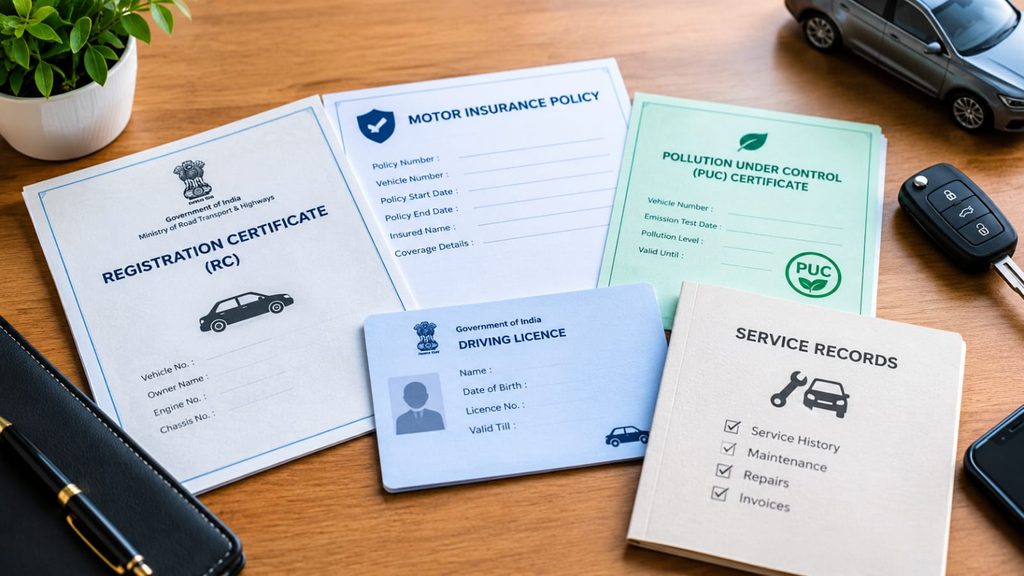
In this guide, we will explain the important car documents every owner should keep, why they matter, and how to manage them properly.
- Registration Certificate (RC)
The Registration Certificate (RC) is one of the most important car documents. It proves that your vehicle is registered with the relevant Regional Transport Office (RTO).
The RC contains important information about your vehicle, such as:
- Vehicle registration number
- Owner’s name
- Engine and chassis numbers
- Vehicle type and fuel type
- Registration date
- Registration validity, where applicable
Why is it important?
The RC helps identify your vehicle and verify its registration details. Keep the document accessible whenever you drive and check that the information is correct.
You can also access your digital RC through the official DigiLocker or mParivahan platforms.
- Driving Licence (DL)
A valid driving licence is essential for anyone driving a car on public roads in India. It confirms that the person is authorised to drive the relevant category of vehicle.
Before driving, check the following details:
- Licence validity
- Correct vehicle category
- Personal details
- Renewal requirements, if applicable
Why is it important?
Driving without a valid licence can result in legal penalties. If you regularly share your car with family members, ensure that every person who drives it has the appropriate valid licence.
- Car Insurance Policy
Car insurance is another essential document that every vehicle owner should maintain. Under Indian law, valid third-party motor insurance is generally mandatory for vehicles used on public roads.
Depending on your policy, insurance may cover third-party liabilities and damage to your own vehicle.
Check these details regularly:
- Policy number
- Vehicle registration number
- Policy start and expiry dates
- Type of insurance coverage
- Insured Declared Value (IDV), where applicable
- Claim and insurer contact details
Why is it important?
Valid insurance helps you meet legal requirements and provides financial protection according to the terms and conditions of your policy.
Renew your policy before it expires. If you buy a used car, make sure the insurance is properly transferred or updated in your name.
- Pollution Under Control (PUC) Certificate
The Pollution Under Control certificate confirms that your vehicle’s emissions have been tested and meet the applicable pollution standards.
The certificate includes information such as the vehicle registration number, test details, emission readings, and validity period.
Why is it important?
A valid PUC certificate is required for applicable vehicles under Indian motor vehicle rules. The testing frequency and requirements may depend on the vehicle and applicable regulations.
Check the expiry date and get your vehicle tested at an authorised emissions testing centre when required.
- Car Purchase Invoice and Sales Documents
When purchasing a new car, keep the purchase invoice and related sales documents safely stored.
These records may include:
- Vehicle purchase invoice
- Dealer payment receipts
- Sales certificate
- Delivery documents
- Warranty documents
- Loan or finance agreement, if applicable
Why are these documents important?
They help establish the purchase details, support warranty-related requests, and provide useful records if questions arise about the vehicle’s ownership or payment history.
For a used car, keep the sale agreement, payment proof, and relevant ownership transfer records.
- Car Service and Maintenance Records
Car service records are useful for every vehicle owner, even when the car is no longer covered by its original warranty.
Maintain records of:
- Regular servicing
- Engine oil and filter changes
- Brake inspections and repairs
- Battery replacement
- Tyre replacement and alignment
- Major repairs and part replacements
- Service bills and warranty claims
Why are car service records important?
A complete service history helps you understand your car’s maintenance needs and identify recurring problems. It can also help demonstrate how the vehicle has been maintained when you decide to sell it.
Keep digital copies of service invoices and update your maintenance records after every visit to a workshop.
- Road Tax and Permit Documents, Where Applicable
Depending on the vehicle, its registration, and how it is used, road tax records and permits may also be important.
Private cars and commercial vehicles can have different documentation requirements. Commercial vehicles may need additional permits, fitness certificates, and tax-related records.
Why are these documents important?
Keeping the applicable records updated helps you verify compliance with the requirements of the relevant transport authority.
Check with your local RTO if you are unsure which documents apply to your vehicle.
- Car Loan and Hypothecation Documents
If you purchased your car using a loan, keep the finance agreement, payment records, and loan closure documents.
Important records may include:
- Loan agreement
- EMI payment statements
- No-dues or loan closure certificate
- Documents required to remove hypothecation from the RC
Why are these documents important?
They help you track your loan obligations and provide evidence when you close the loan or sell the vehicle.
After repaying the loan, check whether the financier’s hypothecation entry needs to be removed from your RC through the applicable RTO process.
- Roadside Assistance and Extended Warranty Documents
Roadside assistance and extended warranty documents are not the same as mandatory vehicle documents, but they can be helpful to keep.
Store details such as:
- Roadside assistance membership number
- Emergency helpline
- Extended warranty coverage
- Warranty expiry date
- Conditions and exclusions
- Claim procedure
Why are these documents useful?
They help you understand what support is available if your car breaks down or develops a covered problem.
Read the terms carefully before requesting assistance or making a warranty claim.
- Documents to Keep in Your Car
For everyday driving, make sure you can produce the applicable documents when required.
Use this simple checklist:
- Valid Registration Certificate (RC)
- Valid driving licence for the person driving
- Valid motor insurance certificate
- Valid PUC certificate, where required
Officially recognised digital versions available through DigiLocker or mParivahan can be used in accordance with applicable rules. Keep your digital documents accessible and up to date.
You do not necessarily need to carry every original purchase invoice, service bill, or loan document in the car. Store these safely at home or in a secure digital folder.
How to Organise Your Car Documents
Keeping your car documents organised saves time and helps you find important information when you need it.
Follow these simple steps:
- Create a physical folder
Store purchase invoices, insurance details, service bills, warranty papers, and loan documents in a clearly labelled folder.
- Save digital copies
Scan important documents and store them in a secure folder on your phone or cloud storage. Use official DigiLocker or mParivahan records for eligible government-issued vehicle documents.
- Track expiry dates
Set reminders for insurance renewal, PUC testing, driving licence renewal, and other applicable deadlines.
- Update service records
After every service, save the invoice and note the date, odometer reading, work completed, and next recommended service.
- Check documents before long trips
Before travelling, confirm that your essential documents are valid and accessible.
Frequently Asked Questions About Car Documents
What are the most important car documents in India?
The key documents generally include the Registration Certificate (RC), valid driving licence, motor insurance certificate, and applicable PUC certificate. Additional documents may be required depending on your vehicle and its use.
Can I show car documents digitally in India?
Yes. Eligible digital documents available through official DigiLocker and mParivahan platforms are recognised under applicable government rules. Make sure you access the authentic digital records.
Is a car service history document mandatory?
A car service history is generally not a mandatory document for everyday driving. However, keeping service invoices and maintenance records is useful for repairs, warranty support, and resale.
How often should I check my car documents?
Check your documents periodically and before long trips. Pay particular attention to insurance, PUC, driving licence, and any applicable registration or permit validity dates.
What documents should I check when buying a used car?
Check the RC, insurance, applicable PUC certificate, seller and ownership details, service history, loan or hypothecation status, and relevant ownership transfer records before completing the purchase.
Conclusion
Keeping the right car documents is an important part of responsible car ownership. From your RC and driving licence to insurance, PUC, and service records, each document serves a different purpose.
Organising your records, saving secure digital copies, and setting reminders for expiry dates can make car ownership easier and help you avoid unnecessary delays.
Make it a habit to review your documents regularly and maintain a complete record of your vehicle’s ownership and maintenance history.